Investigate host responses to microbial metabolites
InvivoGen’s ALPK1/TIFA NF-κB-SEAP reporter cells and MR1-expressing HEK293 cells provide convenient and robust cellular tools to investigate two distinct mechanisms by which the host responds to microbial metabolites.
ALPK1-TIFA reporter cells enable the detection and study of the ALPK1-TIFA signaling pathway, an innate immune pathway activated by bacterial ADP-heptose and related metabolites. 293XL/hMR1 cells enable the presentation of MR1 ligands to mucosal-associated invariant T (MAIT) cells and the study of MR1-dependent MAIT TCR activation.
Both engineered HEK293 cell lines provide dedicated cellular models for investigating microbial metabolite recognition and its impact on host immune responses.
Study ALPK1-TIFA signaling with NF-κB-SEAP reporter cells
Alpha protein Kinase 1 (ALPK1) and TRAF interacting forkhead-associated protein A (TIFA) form an important cytoplasmic surveillance pathway of pathogenic Gram-negative bacteria such as Shigella flexneri and Helicobacter pylori.
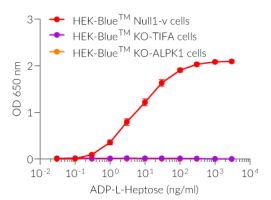
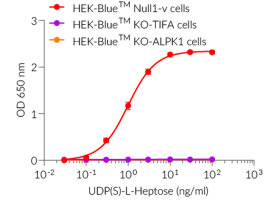
ALPK1 directly recognizes ADP- and UDP-heptose, bacterial sugar nucleotide intermediates of lipopolysaccharide (LPS) biosynthesis. ALPK1 activation triggers the phosphorylation and oligomerization of TIFA, and the formation of 'TIFAsomes’, subsequently leading to downstream NF-κB activation and inflammatory responses.
InvivoGen’s HEK293 ALPK1/TIFA reporter cells feature an NF-κB-inducible SEAP (secreted embryonic alkaline phosphatase) reporter gene, providing a convenient colorimetric readout of ALPK1-TIFA pathway activation. The collection includes cells with functional or disrupted ALPK1 or TIFA, enabling researchers to investigate pathway activation and determine the ALPK1/TIFA dependency of responses to bacterial metabolites and other test compounds.
Upon ALPK1-TIFA-dependent NF-κB activation, the cells secrete SEAP into the culture supernatant. SEAP levels are easily assessed using QUANTI-Blue™ Solution, eliminating the need for cell lysis and providing a sensitive readout of pathway activation.
Study MR1-dependent MAIT cell activation with MR1-expressing HEK293 cells
293XL/hMR1 cells are engineered HEK293-derived target cells designed for the study of MR1-dependent MAIT TCR activation.
These cells stably express human MHC class I-related protein 1 (MR1), enabling the presentation of MAIT-activating ligands. They also constitutively express the human anti-apoptotic Bcl-XL protein to enhance cell viability.
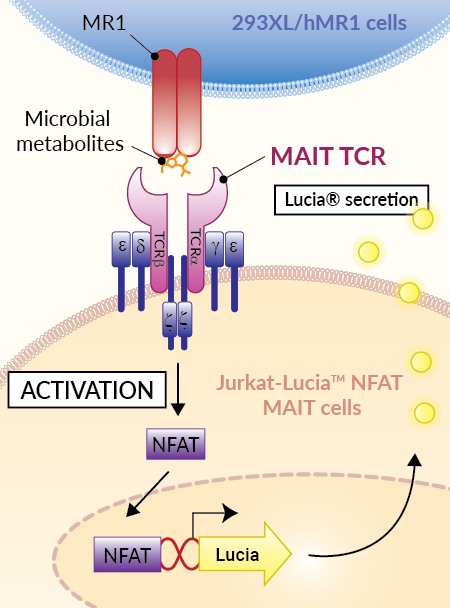
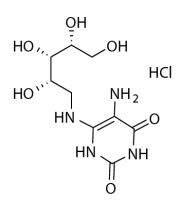
MAIT cells recognize small-molecule antigens presented by MR1, including metabolites derived from the microbial riboflavin biosynthesis pathway. Upon loading 293XL/hMR1 cells with an MR1 ligand, the resulting MR1-ligand complexes are displayed at the cell surface and can be recognized by the semi-invariant MAIT TCR.
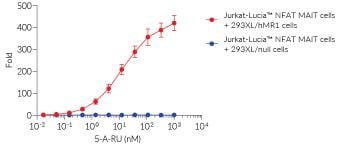
For a sensitive functional readout, 293XL/hMR1 cells can be co-cultured with Jurkat-Lucia™ NFAT MAIT reporter cells, which express a human semi-invariant MAIT TCR together with an NFAT-inducible Lucia® luciferase reporter gene. Engagement of the MAIT TCR by the MR1-ligand complex activates NFAT signaling and induces secretion of Lucia® luciferase. Luciferase activity is readily quantified using QUANTI-Luc™ 4 Lucia/Gaussia, providing a rapid, quantitative, and reproducible measure of MAIT TCR activation.
Key Features
- Engineered HEK293-derived cell lines for studying microbial metabolite-driven immune pathways
- Functionally validated for their respective applications
- Suitable for sensitive cell-based assays
- Stability guaranteed for at least 20 passages
Applications
- Characterization of immune signaling pathways
- Evaluation of microbial and synthetic compounds
- Ligand screening and characterization
- Drug discovery and therapeutic development
Read our review