Tools to study key pathways in host-microbe interactions and immune responses
InvivoGen provides AhR, ALPK1, and MR1/MAIT-related ligands to investigate how environmental, dietary, and microbial small molecules regulate host immune responses. These functionally validated tools include AhR agonists and antagonists, bacterial heptose metabolites that activate ALPK1-TIFA signaling, and 5-A-RU for studying MR1-dependent MAIT cell activation.
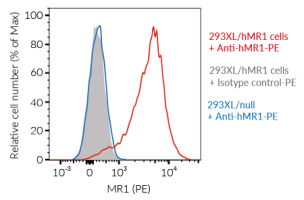
InvivoGen also offers dedicated cell-based tools to study the activity of these ligands and their respective pathways, including AhR reporter cells, ALPK1-TIFA Knockout reporter cells, as well as MR1-expressing HEK293 cells and MAIT reporter T cells to perform co-culture MAIT TCR bioassay.
Together, these ligands and cellular tools enable researchers to investigate ligand activity, pathway activation, and downstream immune responses using functionally validated experimental systems.
AhR ligands for studying immune regulation and host-microbiota interactions
The aryl hydrocarbon receptor (AhR) is a ligand-activated transcription factor that senses a broad range of environmental, dietary, and microbiota-derived molecules. Upon ligand binding, AhR regulates genes involved in xenobiotic metabolism, immune responses, and epithelial barrier homeostasis.
InvivoGen offers the AhR agonist FICZ, a tryptophan-derived compound, and the AhR antagonist CH-223191 for investigating AhR signaling and its roles in immunity and host–microbiota interactions.
ALPK1 ligands for studying bacterial metabolite sensing
The ALPK1-TIFA pathway is an innate immune surveillance pathway that detects bacterial metabolites associated with Gram-negative bacteria.
ADP- and UD(PS)-heptose are bacterial sugar metabolites and intermediates of lipopolysaccharide (LPS) biosynthesis that directly activates ALPK1 (alpha-kinase 1). Activated ALPK1 phosphorylates TIFA (TRAF-interacting protein with forkhead-associated domain A), promoting TIFA oligomerization and downstream NF-κB signaling.
InvivoGen provides synthetic ADP-L-heptose and UD(PS)-heptose for investigating ALPK1-TIFA activation, bacterial sensing, and inflammatory responses.
5-A-RU for studying MR1-dependent MAIT cell activation
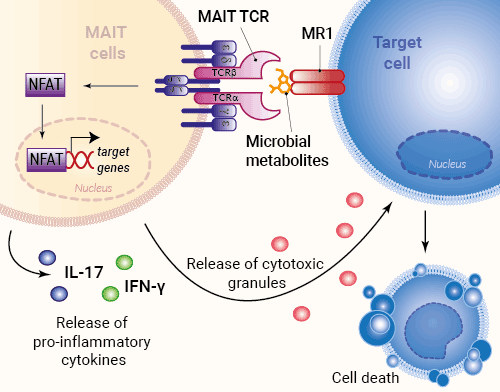
5-A-RU (5-amino-6-D-ribitylaminouracil) is an intermediate of the microbial riboflavin biosynthesis pathway and a precursor of potent MR1-presented MAIT cell antigens.
5-A-RU reacts with small carbonyl compounds, such as methylglyoxal, to generate 5-OP-RU, a potent MAIT antigen. 5-OP-RU binds MR1 (MHC class I-related protein 1) and is presented at the cell surface for recognition by the semi-invariant MAIT TCR, resulting in MAIT cell activation.
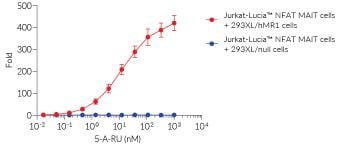
5-A-RU can be used with MR1-expressing cells and MAIT reporter cells to investigate MR1-dependent antigen presentation, characterize MAIT TCR activation, and evaluate compounds that modulate the MR1-MAIT axis.
Key features
- Lot-to-lot functionally validated research tools
- Suitable for cell-based pathway and immune activation assays
- Guaranteed free of unwanted bacterial contaminants
Applications
- Characterization of immune signaling pathways
- Evaluation of microbial and synthetic compounds
- Ligand screening and characterization
- Drug discovery and therapeutic development