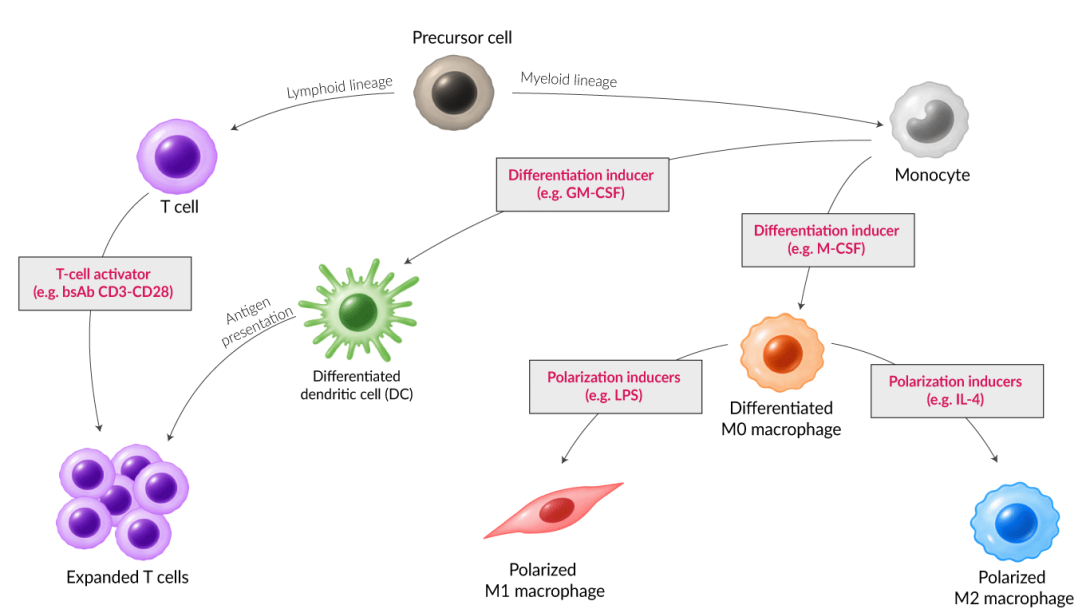
Cell proliferation, differentiation, and polarization are fundamental processes that shape immune cell development and function. Proliferation increases cell numbers through cell division, leading to population expansion while differentiation drives cells toward specialized cell types. Moreover, polarization allows differentiated cells to acquire distinct functional phenotypes in response to environmental signals. These processes are tightly regulated by cytokines, growth factors, and receptor-mediated signals and are essential for the generation, maintenance, and functional adaptation of lymphoid and myeloid immune cells. Different signals can therefore be used in vitro to control these processes, from T-cell activation and cytokine-driven proliferation to myeloid cell differentiation and polarization.
T-cell activation and expansion
T-cell activation and expansion are essential steps in the generation of an effective adaptive immune response. T-cell activation requires signaling through the T-cell receptor (TCR) complex together with appropriate costimulatory signals. CD3 and CD28 are key components of these processes, providing activation and costimulatory signals that promote T-cell proliferation, survival, and effector functions. Simultaneous targeting of CD3 and CD28 using a bispecific antibody provides an effective approach to activate and expand enriched T-cell populations or T cells directly from peripheral blood mononuclear cells (PBMCs) in vitro.
Cytokine-driven immune cell proliferation and differentiation
Cytokines are key regulators of immune cell proliferation, survival, and differentiation. Members of the common gamma-chain (γc) cytokine family, including IL-2, IL-7, and IL-15, have overlapping but distinct functions in lymphocyte biology. IL-2 is a major growth factor for activated T cells, IL-7 supports lymphocyte development and T-cell homeostasis, and IL-15 contributes to the development, proliferation, and maintenance of NK cells and CD8⁺ T cells. Furthermore, GM-CSF supports the survival, proliferation, and differentiation of myeloid cells, including their differentiation toward dendritic cells (DCs). Together, these cytokines provide essential signals that regulate the development and maintenance of diverse immune cell populations during homeostasis and immune responses.
Macrophage and dendritic cell differentiation and polarization
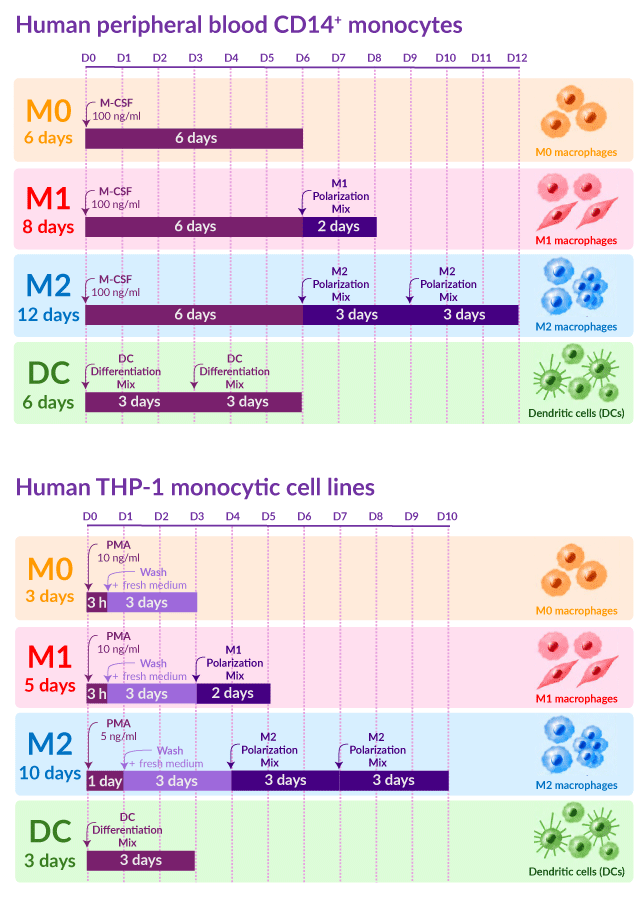
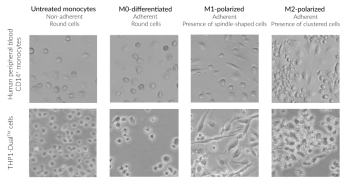
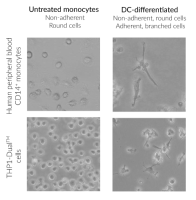
Monocytes can differentiate into macrophages or DCs in response to specific environmental signals. Primary human CD14+ monocytes can be differentiated in vitro into M0 macrophages using M-CSF, while monocytic cell lines such as THP-1 cells can be differentiated into M0 macrophages using phorbol 12-myristate 13-acetate (PMA). M0 macrophages can subsequently acquire distinct polarization states in response to specific stimuli. IFN-γ and microbial signals such as LPS promote pro-inflammatory M1 polarization, whereas IL-4 and IL-13 promote immunoregulatory M2 polarization. Alternatively, primary monocytes and THP-1 cells can be driven toward DC phenotypes using differentiation signals such as GM-CSF and IL-4, while additional stimuli such as TNF-α can promote DC activation and maturation. Controlled in vitro differentiation and polarization therefore provide useful models to investigate macrophage and DC phenotypes, immune signaling, and function.
To facilitate your research on immune cell proliferation, differentiation, and polarization, InvivoGen offers a set of tools comprising:
- Bispecific CD3-CD28 antibody for T-cell activation and expansion
- Recombinant cytokines supporting immune cell proliferation and differentiation
- M1 and M2 Polarization Mixes and DC Differentiation Mix for human primary CD14+ monocytes and THP-1 cells