


pUNO2-Null-Cy5
-
Cat.code:
puno2-nullcy5
- Documents
ABOUT
Cy5 labeled plasmid DNA for cGAS activation and gene tracking
pUNO2-Null-Cy5 and pUNO2-GFP-Cy5 are two circular plasmid DNA, designed as potent ligands for the double-stranded (ds)DNA sensor cGAS (cyclic GMP-AMP synthase).
Intracellular dsDNA acts as a danger signal indicating potential disturbances in cellular homeostasis due to infection, sterile tissue damage, or cancer. It is recognized by several cytosolic DNA sensors (CDS), triggering innate immune responses through the production of type I interferons (IFNs).

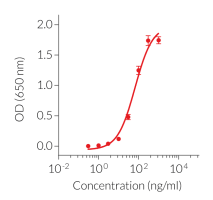
Both plasmids are chemically labeled by direct covalent coupling of a Cyanine 5 (Cy5) probe for monitoring cellular uptake and expression kinetics using microscopy, flow cytometry, and other fluorescence-based applications. They also strongly activate cGAS, as verified using InvivoGen’s HEK‑Dual™ cGAS cells (see figures).
In addition to Cy5 labeling, pUNO2-GFP-Cy5 encodes the green fluorescent protein (GFP), offering a reliable readout for transfection efficacy and gene delivery studies (see illustration). In order to facilitate intracellular delivery, the ligand should be complexed with a cationic lipid transfection agent, such as LyoVec™.
Cyanine5 (Cy5) is a bright, far-red-fluorescent dye with excitation designed for use with the 633 nm or 647 nm laser lines. Its reduced photobleaching properties, low background fluorescence in biological samples, enhancing signal-to-noise ratio, and its compatibility with a wide range of detectors and imaging systems make it ideal for sensitive detection across many imaging platforms.
Cy5® is a registered trademark of GE Healthcare.
Cy™ and CyDye™ are trademarks of Cytiva.
All products are for research use only, and not for human or veterinary use.

SPECIFICATIONS
Specifications
cGAS
1 ng/ml - 1 μg/ml
100 mg/ml in water
The absence of bacterial contamination (e.g. lipoproteins and endotoxins) has been confirmed using HEK-Blue™ TLR2 and HEK‑Blue™ TLR4 cells.
Flow cytometry
Fluorescent microscopy
Confocal microscopy
PRR activation studies
In vitro and in vivo tracking for gene delivery studies
Each lot is functionally tested and validated.
Spectral Properties
- Excitation λ max: 647 nm (Cy5)
- Emission λ max: 665 nm (Cy5)
CONTENTS
Contents
-
Product:pUNO2-Null-Cy5
-
Cat code:puno2-nullcy5
-
Quantity:10 µg
1.5 ml sterile endotoxin-free water
Shipping & Storage
- Shipping method: Room temperature
- -20°C
- Avoid repeated freeze-thaw cycles
- Protect from light
Storage:
Caution:
Details
Cyclic GMP-AMP synthase, also known as cGAS or cGAMP synthase, is the primary sensor of cytosolic double-stranded DNA (dsDNA), a danger signal indicating possible disturbances in homeostasis caused by infection, sterile tissue damage, or cancer [1]. It triggers innate immune responses through the production of type I interferons (IFNs) [2].
In response to cytosolic dsDNA (e.g., microbial DNA, mitochondrial DNA, extracellular self-DNA), cGAS catalyzes its substrates GTP and ATP (guanosine triphosphate and adenosine triphosphate [ATP]) into the cyclic dinucleotide (CDN) 2’3’-cGAMP. CDNs bind directly to the stimulator of interferon genes (STING), leading to TBK1‑IRF3-mediated activation of IFN-stimulated response elements (ISRE) in the promoters of IFN-stimulated genes (ISG) [1,3,4].
Current research on the cGAS–STING pathway is focusing on finding new cancer therapies, considering its role in inducing cell-intrinsic processes, such as autophagy, cellular senescence, and cell death. In contrast, dysregulated or excessive activation of the cGAS–STING pathway can cause primary pathogenesis and the manifestation of several autoimmune diseases; thus, identifying compounds, delivery pathways, and treatment regimens targeting the suppression of the cGAS–STING pathway can provide novel approaches to alleviate the symptoms of autoimmune disorders or inflammation [1].
References:
1. Zhou J, et al., 2023. Significance of the cGAS-STING Pathway in Health and Disease. Int J Mol Sci. 24(17):13316.
2. Sun L. et al., 2013. Cyclic GMP-AMP synthase is a cytosolic DNA sensor that activates the type I interferon pathway. Science 339(6121):786-91.
3. Gao P. et al., 2013. Cyclic [G(2’,5’)pA(3’,5’)p] is the metazoan second messenger produced by DNA-activated cyclic GMP-AMP synthase. Cell. 153(5):1094-107.
4. Ablasser A. et al., 2013. cGAS produces a 2’-5’-linked cyclic dinucleotide second messenger that activates STING. Nature. 498(7454):380-4.
5. Lama L, et al. 2019. Development of human cGAS-specific small-molecule inhibitors for repression of dsDNA-triggered interferon expression. Nat Commun.10(1):2261.
DOCUMENTS
Documents
Technical Data Sheet
Validation Data Sheet
Safety Data Sheet
Certificate of analysis
Need a CoA ?


 Powered by Bioz