Anti-hIL-6-mIgG1
-
Cat.code:
mab9-hil6
- Documents
ABOUT
Recombinant anti-human IL-6 neutralizing monoclonal antibody
Anti-hIL-6-mIgG1 is a monoclonal antibody (mAb) targeting human interleukin-6 (hIL-6).
It was previously extracted from hybridoma cells (clone 3H3). It is now expressed and produced in Chinese hamster ovary (CHO) cells, ensuring reliability and lot-to-lot reproducibility. This antibody has been selected for its ability to neutralize the biological activity of hIL-6 efficiently.
IL-6 is a multifunctional cytokine that plays an important role in the regulation of the immune response, hematopoiesis, and inflammation.

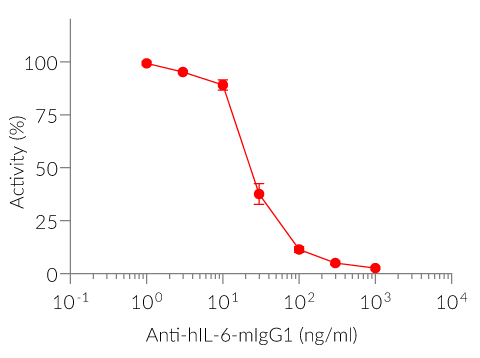
This antibody can be used together with HEK-Blue™ IL-6 Cells treated with recombinant human IL-6 for screening and neutralization assays to block interleukin-6 signaling.
Key features
- Each lot is functionally tested and validated.
- The complete sequence of the antibody construct has been verified.
The absence of endotoxins is determined by the EndotoxDetect™ assay.
The hybridoma-derived Anti-hIL-6-IgG (mabg-hil6-3) antibody has been replaced by Anti-hIL-6-mIgG1 (mab9-hil6), which is produced by recombinant technology and purified from CHO cells.
Disclaimer: These cells are for internal research use only and are covered by a Limited Use License (See Terms and Conditions). Additional rights may be available.
SPECIFICATIONS
Specifications
IL-6
Human
Neutralization (tested)
ELISA
Sodium phosphate buffer with glycine, saccharose, and stabilizing agents
Negative (tested using EndotoxDetect™ assay)
Each lot is released only after meeting predefined biological activity specifications in a cell-based assay.
CONTENTS
Contents
-
Product:Anti-hIL-6-mIgG1
-
Cat code:mab9-hil6
-
Quantity:100 µg
Shipping & Storage
- Shipping method: Room temperature
- -20°C
- Avoid repeated freeze-thaw cycles
Storage:
Caution:
Details
The proinflammatory cytokine IL-6 is one of the most important mediators in the regulation of the immune response, hematopoiesis, and inflammation [1]. It plays roles in chronic inflammation, autoimmune diseases, and cancer. In addition, it has been reported to be involved in the cytokine storm triggered by the corona virus disease 2019 (COVID-19) [2].
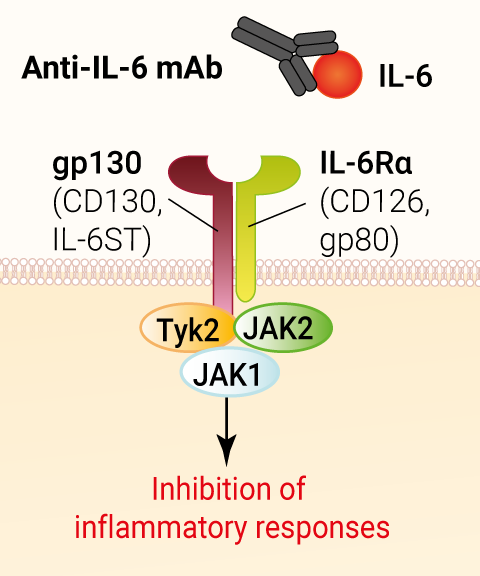
IL-6 exerts its action by first binding to the IL-6 receptor (IL-6R). The complex of IL-6 and IL-6R associates with the signal-transducing membrane protein gp130, thereby inducing its dimerization. This leads to the downstream activation by phosphorylation of certain tyrosine kinases within the Janus family (JAK1, JAK2, and Tyk2). Subsequently, activated JAKs induce phosphorylation, dimerization and translocation of the signal transducer and activator of transcription 3 (STAT3) to the nucleus where it binds enhancer elements of IL-6 inducible genes [3]. Considering the various properties of this pleiotropic cytokine, the IL-6–STAT3 signaling axis is now considered a major target for the treatment of inflammatory diseases [2].
References:
1. Kang S. et al., 2015. Therapeutic uses of anti-interleukin-6 receptor antibody. Int. Immunol. 27: 21-9.
2. Hirano T., 2021. IL-6 in inflammation, autoimmunity and cancer. Int Immunol. 1;33(3):127-148.
3. Murray P., 2007. The JAK-STAT Signaling Pathway: Input and Output Integration. J. Immunol. 178:2623-9.
DOCUMENTS
Documents
Technical Data Sheet
Validation Data Sheet
Safety Data Sheet
Certificate of analysis
Need a CoA ?
 Powered by Bioz