


GLP-1 (7-36)
-
Cat.code:
hlc-glp1
- Documents
ABOUT
Selective GLP-1R agonist – CAS #107444-51-9
Glucagon-like peptide-1 (GLP-1) is an insulinotropic incretin that regulates glucose homeostasis and appetite, making it highly relevant for obesity research. This gut-derived hormone enhances glucose-dependent insulin secretion, suppresses glucagon secretion, delays gastric emptying, and promotes satiety. As such, the GLP-1 pathway has become a major therapeutic target in diabetes, obesity, and cardiometabolic research.

GLP-1 (7-36) amide is a 30-amino-acid peptide, spanning amino acids 7 to 36 of proglucagon. It features a naturally occurring, amidated C-terminal modification (-NH₂) that enhances its stability as well as biological function. Its amino-acid sequence is highly conserved across many species, such as human, mouse, rat, bovine, and rhesus monkey. This form is the major active circulating form of GLP-1, whereas GLP-1 (7-37) is less common. Both exert their effects through activation of the GLP-1 receptor (GLP-1R).
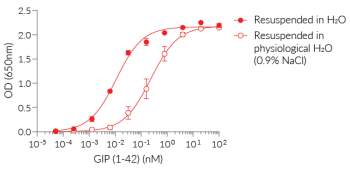
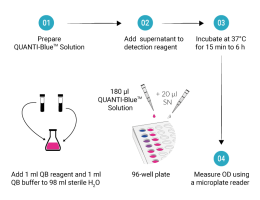
InvivoGen GLP-1 (7-36) amide is highly pure and guaranteed sterile, making it suitable for in vivo studies. The biological activity can be assessed using a colorimetric bioassay consisting of the engineered cell line HEK-Blue™ GLP-1 expressing the GLP-1R together with a CREB-inducible SEAP reporter gene (see figure).
Key features
- Each lot is validated using HEK-Blue™ GLP-1 cells
- Guaranteed sterile
- No ultrasonication step needed
- Endotoxin-tested
Illustrations on this page were created with BioRender.com.
All products are for research use only, and not for human or veterinary use.

SPECIFICATIONS
Specifications
1 mM (3.29 mg/ml) in water or physiological water
0.22 µm filtration, Sterility guaranteed
The absence of bacterial contamination (e.g. lipoproteins and endotoxins) has been confirmed using HEK-Blue™ TLR2 and HEK‑Blue™ TLR4 cells.
Cellular assays (tested)
In vivo assays
Each lot is functionally tested and validated.
Chemical formula: C149H226N40O45 .CF3OOH
Short sequence: HAEGTFTSDVSSYLEGQAAKEFIAWLVKGR-NH2
Salt form: Trifluoroacetate (TFA)
CONTENTS
Contents
-
Product:GLP-1 (7-36)
-
Cat code:hlc-glp1
-
Quantity:1 mg
1.5 ml sterile endotoxin-free physiological water (NaCl 0.9%)
Shipping & Storage
- Shipping method: Room temperature
- -20°C
- -80°C
- Avoid repeated freeze-thaw cycles
Storage:
Caution:
Details
GLP-1R signaling and metabolic regulation
Peptide hormones acting through the glucagon-like peptide-1 receptor (GLP-1R) play a central role in the regulation of glucose metabolism and energy balance [1]. In pancreatic β cells, GLP-1R activation signals primarily through G protein–mediated signaling pathways involving cyclic adenosine monophosphate (cAMP), protein kinase A (PKA), and cAMP response element–binding protein (CREB), thereby enhancing glucose-dependent insulin secretion and supporting β-cell function. Beyond its insulinotropic effects, GLP-1R signaling also influences lipid metabolism by modulating hepatic lipid handling and adipose tissue function. Dysregulation of GLP-1R signaling contributes to impaired insulin secretion, altered lipid homeostasis, hyperglycemia, and metabolic dysfunction observed in obesity and type 2 diabetes [1].
Therapeutic relevance of GLP-1
Incretins are gut-derived peptide hormones released after nutrient ingestion that enhance glucose-dependent insulin secretion from pancreatic β cells. The two principal incretins, GLP-1 (glucagon-like peptide-1) and GIP (glucose-dependent insulinotropic polypeptide), act together with insulin and glucagon to regulate glucose homeostasis and energy balance [1]. The biologically active circulating form of GLP-1 is GLP-1 (7-36) amide, a 30-amino-acid peptide generated from post-translational processing of the proglucagon precursor and featuring a naturally occurring C-terminal amidation (-NH₂) [2].
Because of its central role in metabolic regulation, the GLP-1 signaling axis has become a major therapeutic target for the treatment of obesity and type 2 diabetes. GLP-1R agonists mimic the physiological effects of endogenous GLP-1 while exhibiting improved stability and prolonged activity compared to the native peptide. In this context, the GLP-1 analog semaglutide (Ozempic®/Wegovy®) has significantly improved glycemic control and promoted substantial weight loss in clinical studies [2,3]. More recently, orally active small-molecule GLP-1R agonists have emerged as an alternative to injectable peptide drugs. Orforglipron (LY3502970) is a non-peptide GLP-1R agonist currently in clinical development that has demonstrated promising effects on glycemic control and body weight reduction, highlighting the continued expansion of GLP-1-based therapeutic strategies [4].
References:
1. Zheng Z et al., 2024. Glucagon-like peptide-1 receptor: mechanisms and advances in therapy. Sig Transduct Target Ther. 9:234.
2. Drucker DJ, 2018. Mechanisms of Action and Therapeutic Application of GLP-1. Cell Metab. 27(4):740-756.
3. Chao AM et al. 2023. Semaglutide for the treatment of obesity. Trends Cardiovasc Med. 33(3):159-166.
4. Horn DB et al., 2025. Orforglipron, an oral small-molecule GLP-1 receptor agonist, for the treatment of obesity in people with type 2 diabetes (ATTAIN-2): a phase 3, double-blind, randomised, multicentre, placebo-controlled trial. The Lancet. 406(10522): 2927-2944.
DOCUMENTS
Documents
Technical Data Sheet
Validation Data Sheet
Safety Data Sheet
Certificate of analysis
Need a CoA ?


 Powered by Bioz