
Recombinant human EPO
-
Cat.code:
rcyc-hepo
- Documents
ABOUT
Human EPO protein - Mammalian cell-expressed, tag-free, carrier-free
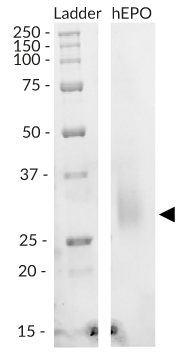
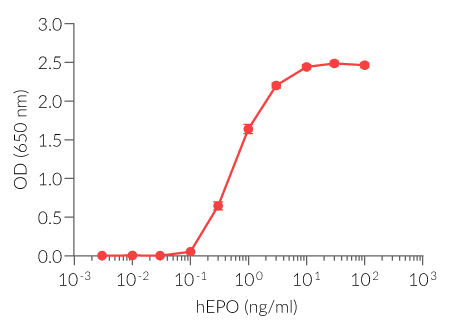
Recombinant human EPO is a high-quality and biologically active cytokine, validated using proprietary EPO reporter cells. This hematopoietic growth factor is produced in CHO cells to ensure protein glycosylation and bona fide 3D structure.
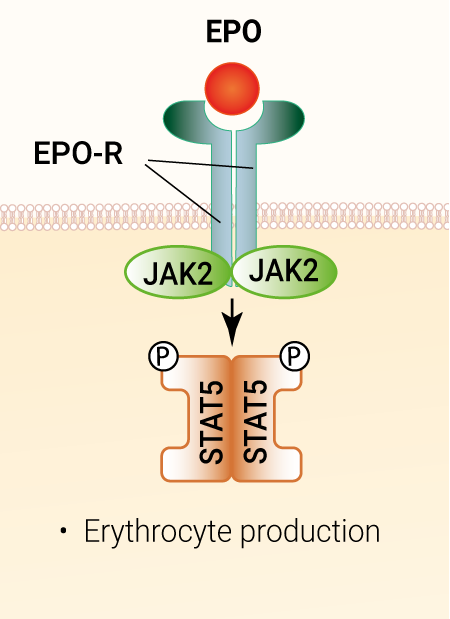
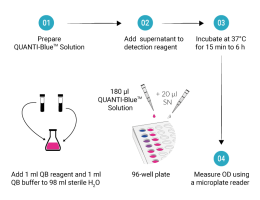
Recombinant human EPO can be used together with HEK-Blue™ EPO cells for the screening of inhibitory molecules, such as therapeutic monoclonal antibodies targeting the EPO signaling pathway (see figures).
Key features
- Each lot is validated using HEK-Blue™ EPO cells
- Endotoxin < 0.1 EU/µg
- 0.22 µm sterile-filtered
Applications
- Standard for EPO detection and quantification assays
- Screening and release assays for antibodies blocking EPO signaling
- Screening and release assays for engineered EPO
Erythropoietin (EPO) plays a pivotal cytokine in hematopoiesis, acting as the primary regulator of red blood cell production. Recombinant forms of EPO have transformed anemia management in clinical settings and remain an essential tool in basic and translational research. Beyond its hematopoietic role, EPO continues to serve as a key model for studying cytokine signaling and the link between oxygen sensing and cellular adaptation.

All products are for research use only, and not for human or veterinary use.
Meet the MiniKines™: Collectible Cytokine Cards

SPECIFICATIONS
Specifications
P01588
100 μg/ml in water
Phosphate buffer saline (pH 7.4), 5% saccharose
0.22 µm filtration
The absence of bacterial contamination (e.g. lipoproteins and endotoxins) has been confirmed using HEK-Blue™ TLR2 and HEK‑Blue™ TLR4 cells.
Cellular assays
Each lot is functionally tested and validated.
CONTENTS
Contents
-
Product:Recombinant human EPO
-
Cat code:rcyc-hepo
-
Quantity:20 µg
1.5 ml endotoxin-free water
Shipping & Storage
- Shipping method: Room temperature
- -20°C
- Avoid repeated freeze-thaw cycles
Storage:
Caution:
Details
Erythropoeitin background
Erythropoietin (EPO) is an N-linked glycoprotein hormone and hematopoietic growth factor that plays a central role in the regulation of erythropoiesis. It promotes the proliferation, survival, and differentiation of erythroid progenitor cells, ensuring adequate red blood cell homeostasis [1]. Beyond its well-established hematopoietic function, EPO also exhibits diverse biological activities in non-hematopoietic tissues, including the brain, liver, skeletal muscle, and adipose tissue [2,3].
Relevance for therapeutics development
Recent research has revealed that EPO contributes to whole-body metabolic regulation by influencing lipid and glucose metabolism. In adipose tissue and liver, EPO enhances lipolysis, reduces lipogenic gene expression, and improves glucose tolerance, thereby maintaining metabolic homeostasis [2]. In obesity, EPO exerts anti-inflammatory effects by modulating macrophage polarization and reducing pro-inflammatory cytokine production in insulin-sensitive tissues such as white adipose tissue and the liver [3].
Clinically, recombinant human EPO is widely used to treat anemia associated with chronic kidney disease, and its metabolic and tissue-protective properties are increasingly recognized as potential therapeutic targets. Furthermore, the development of non-hematopoietic EPO analogs offers a promising strategy to harness its protective and anti-inflammatory actions without stimulating erythropoiesis [3].
References:
1. Tsiftsoglou A.S., 2021. Erythropoietin (EPO) as a key regulator of erythropoiesis, bone remodeling and endothelial transdifferentiation of multipotent mesenchymal stem cells (MSCs): implications in regenerative medicine. Cells. 10:2140.
2. Yin W. & Noguchi C.T., 2025. The role of erythropoietin in metabolic regulation. Cells. 14:280.
3. Sugimoto S. & Goda T., 2025. Non-hematopoietic roles of erythropoietin in inflammation and metabolic disorders. Front. Pharmacol. 16:1613849.
DOCUMENTS
Documents
Technical Data Sheet
Validation Data Sheet
Safety Data Sheet
Certificate of analysis
Need a CoA ?
 Powered by Bioz