


Recombinant human CD40L (CHO)
-
Cat.code:
rcyc-hcd40l
- Documents
ABOUT
Human CD40L protein - Mammalian cell-expressed, tag-free, carrier-free
Recombinant human CD40L is a high-quality and biologically active cytokine, validated using proprietary CD40L reporter cells. This member of the TNF superfamily is produced in CHO cells to ensure protein glycosylation and bona fide 3D structure.
Recombinant human CD40L can be used together with HEK-Blue™ CD40L cells for the screening of inhibitory molecules, such as Frexalimab, a monoclonal antibody targeting CD40L (see figures).
Key features
- Each lot is validated using HEK-Blue™ CD40L cells
- Endotoxin ≤ 0.1 EU/µg
- 0.22 µm sterile-filtered
Applications
- Standard for CD40L detection and quantification assays
- Screening and release assays for antibodies blocking CD40L signaling
- Screening and release assays for engineered CD40L
CD40 Ligand (CD40L) is a protein that is primarily expressed on activated T cells and is a member of the tumor necrosis factor superfamily. Of note, CD40L, together with its receptor CD40, plays a pivotal role in cellular and humoral immunity.

All InvivoGen products are for internal research use only, and not for human or veterinary use.

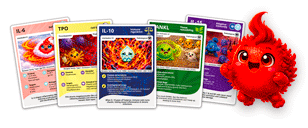
Meet the MiniKines™: Collectible Cytokine Cards
SPECIFICATIONS
Specifications
P29965
100 μg/ml in water
Phosphate buffer saline (pH 7.4), 5% saccharose
0.2 µm filtration
The absence of bacterial contamination (e.g. lipoproteins and endotoxins) has been confirmed using HEK-Blue™ TLR2 and HEK‑Blue™ TLR4 cells.
Cellular assays (tested), ELISA
Each lot is functionally tested and validated.
CONTENTS
Contents
-
Product:Recombinant human CD40L (CHO)
-
Cat code:rcyc-hcd40l
-
Quantity:10 µg
1.5 ml endotoxin-free water
Shipping & Storage
- Shipping method: Room temperature
- -20°C
- Avoid repeated freeze-thaw cycles
Storage:
Caution:
Details
CD40 Ligand (CD40L), also known as CD154, TRAP, or gp39, is a type II transmembrane glycoprotein belonging to the tumor necrosis factor (TNF) family. It is mainly expressed in CD4+-T cells and interacts with CD40 on antigen-presenting cells to regulate both humoral and cellular immune responses [1-3].
The CD40 cytoplasmic domain binds directly to several TNF receptor-associated factors (TRAFs), and this interaction is thought to initiate CD40 signaling. CD40-mediated signaling results in NF-κB, c-Jun N-terminal kinase (JNK), and p38 mitogen-activated protein kinase (MAPK) activation. CD40L-CD40 interactions are thought to play an important role in the pathogenesis of many diseases [4, 5].
1. Karnell J.L. et al., 2019. Targeting the CD40-CD40L pathway in autoimmune diseases: Humoral immunity and beyond. Adv Drug Deliv Rev. 141:92-103.
2. Laman J.D. et al., 2017. Functions of CD40 and Its Ligand, gp39 (CD40L). Crit Rev Immunol. 37(2-6):371-420.
3. Elgueta R. et al., 2009. Molecular mechanism and function of CD40/CD40L engagement in the immune system. Immunol. Rev. 229, 152–172.
4. Seijkens T. et al., 2013. CD40–CD40L: Linking pancreatic, adipose tissue and vascular inflammation in type 2 diabetes and its complications. Diabetes and Vascular Disease Research. 10: 115-122.
5. Daoussis D. et al., 2004. Targeting CD40L: a promising therapeutic approach. Clin Diagn Lab Immunol. 11(4):635-41.
DOCUMENTS
Documents
Technical Data Sheet
Validation Data Sheet
Safety Data Sheet
Certificate of analysis
Need a CoA ?


