
Recombinant mouse IL-18
-
Cat.code:
rcyec-mil18
- Documents
ABOUT
Mouse IL-18 protein - E. coli -expressed, tag-free, carrier-free
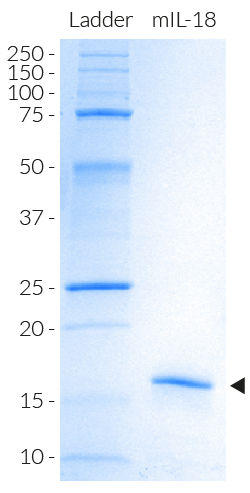
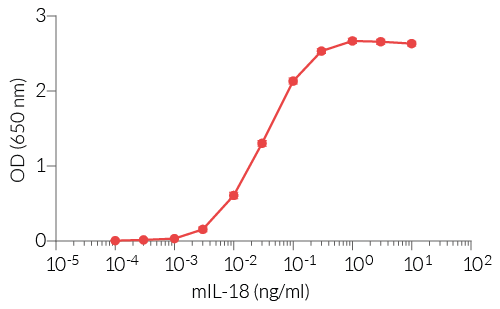
Recombinant mouse (m)IL-18 is a high-quality and biologically active cytokine, validated using proprietary IL-18 reporter cells. This member of the IL-1/TLR cytokine superfamily is produced in E. coli and thoroughly purified to remove endotoxins.
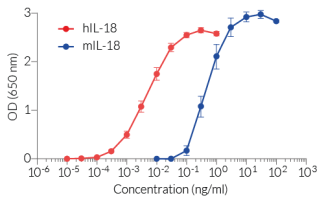
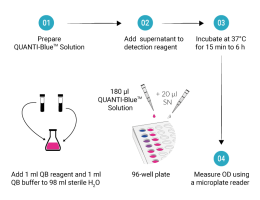
Recombinant mouse IL-18 can be used together with HEK-Blue™ mIL-18 cells for the screening of inhibitory molecules, such as monoclonal antibodies targeting mIL-18 or its receptor and cross-reacting with their human counterparts (see figures).
Key features
- Each lot is validated using HEK-Blue™ mIL-18 cells
- Endotoxin < 1 EU/µg
- 0.22 µm sterile-filtered
Applications
- Standard for mIL-18 detection and quantification assays
- Screening and release assays for antibodies blocking IL-18 signaling
Interleukin-18 (IL-18) is a pro-inflammatory cytokine and a powerful inducer of type 1 responses mediated by activated NK, Th1, and CD8+ cytotoxic T cells. Excessive IL-18 signaling, either due to gain-of-function mutations or inefficient negative regulation, is linked to inflammatory disorders (e.g. macrophage activation syndrome (MAS), systemic juvenile idiopathic arthritis (sJIA), adult-onset Still’s disease (AOSD), metabolic syndrome) and autoimmune diseases (e.g. Crohn’s disease, systemic lupus erythematosus (SLE)).

All InvivoGen's products are for internal research use only, and not for human or veterinary use.
Meet the MiniKines™: Collectible Cytokine Cards
SPECIFICATIONS
Specifications
P70380-1
100 μg/ml in water
Phosphate buffer saline (pH 7.4), 22% trehalose
0.22 µm filtration
The absence of bacterial contamination (e.g. lipoproteins and endotoxins) has been confirmed using HEK-Blue™ TLR2 and HEK‑Blue™ TLR4 cells.
Cellular assays (tested), ELISA
Each lot is functionally tested and validated.
CONTENTS
Contents
-
Product:Recombinant mouse IL-18
-
Cat code:rcyec-mil18
-
Quantity:10 µg
1.5 ml endotoxin-free water
Shipping & Storage
- Shipping method: Room temperature
- -20°C
- Avoid repeated freeze-thaw cycles
Storage:
Caution:
Details
IL-18 background
Interleukin-18 (IL-18) is a member of the IL-1/Toll-like receptor cytokine superfamily, a group of cytokines that play important roles in host defense, immune regulation, and inflammation [1-3]. It is principally produced by macrophages, dendritic cells, endothelial cells, and epithelial cells. Like IL-1β, it is synthesized as an inactive precursor that is cleaved and processed into its mature bioactive form by caspase-1 upon inflammasome activation [1, 2].
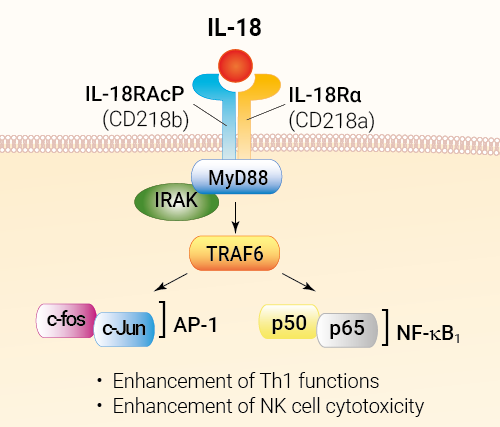
IL-18 mediates its biological effects through the IL-1R5 receptor (also known as IL-18Rα, CD218a) and the IL-1R7 accessory protein (also known as IL-18RAcP, IL-18β, CD218b) [1, 2, 4]. Upon ligand binding, IL-1Rs dimerize through their Toll/interleukin-1 resistance (TIR) domains to recruit the MyD88 adaptor protein, which then couples to IL-1R-associated kinases (IRAKs) and tumor necrosis factor receptor-associated factor 6 (TRAF6). This leads to the activation of key transcription factors, including NF-κB, AP-1, and IRFs [1-4].
Formerly known as interferon-γ (IFN-γ) inducing factor, IL-18 drives pro-inflammatory responses from both the innate and adaptive immune systems [1-3]. It is primarily described as a potent inducer of NK (natural killer) cell activation and the polarization of CD4+ T-helper cells into Th1 or Th2 types, depending on the surrounding cytokine milieu. In addition, IL-18 exhibits characteristics of other proinflammatory cytokines, including increases in cell adhesion molecules, nitric oxide synthesis, and chemokine production. IL-18 plays a prominent role in fighting microbial infections caused by viruses, intracellular bacteria, or fungi.
The activity of mature IL-18 is controlled by the IL-18BP (IL-18 binding protein), which functions as a decoy receptor, preventing IL-18 from engaging with the signaling receptor [1-3].
Relevance for therapeutics development
Excessive IL-18 signaling, either due to gain-of-function mutations or inefficient negative regulation, is linked to inflammatory disorders (e.g., macrophage activation syndrome (MAS), systemic juvenile idiopathic arthritis (sJIA), adult-onset Still’s disease (AOSD), metabolic syndrome) and autoimmune diseases (e.g., Crohn’s disease, systemic lupus erythematosus (SLE)) [1, 2].
Therapeutic strategies include recombinant human IL-18BP (Tadekinig alpha) and an anti-human IL-18 monoclonal antibody (Camoteskimab) to neutralize IL-18 signaling. Conversely, DR-18 (ST-067), an IL-18 mutein resistant to IL-18BP decoy receptor, has shown promising results in augmenting immune responses to cancer [1].
References:
1. Landy, E., et al., 2024. Biological and clinical roles of IL-18 in inflammatory diseases. Nat Rev Immunol. 20(1):33-47.
2. Kaplancki, G., et al., 2017. Interleukin-18: Biological properties and role in disease pathogenesis. Immunol Rev. 281(1):138-153.
3. Mantovani, A., et al., 2019. Interleukin-1 and Related Cytokines in the Regulation of Inflammation and Immunity. Immunity. 50(4): p. 778-795.
4. Gaballa, J.M., et al., 2024. International nomenclature guidelines for the IL-1 family of cytokines and receptors. Nature Immunology. 25(4): p. 581-582.
DOCUMENTS
Documents
Technical Data Sheet
Validation Data Sheet
Safety Data Sheet
Certificate of analysis
Need a CoA ?

 Powered by Bioz